Hi everyone! Sorry, it's been a while. For those of you who haven't been following - I started this tropical garden in my parent's yard when I was in high school (long before this blog started!), but I moved away 4 years ago to the sunny south. I have my own garden now, but my parents' garden is still thriving!
The COVID-19 pandemic made it difficult to safely leave South Carolina and visit my family in New York City this past year. Fortunately, I was able to come up in the fall to bring all my tropical plants inside the house, and I just visited for a short but sweet weekend to celebrate my dad's birthday, Mothers, day, and plant a lot of pretty things!
It was a very mild winter for New York City. The low temperature in my yard was 16F and Newark Airport reported a similar low. That's typical for a zone 8b and is the second warmest winter minimal temperature on record (number 1 is 18F in 2002).
Below I've shared a few things I'm really excited to see sprouting in the garden this month. Everything is coming back to life quickly after the mild winter weather.
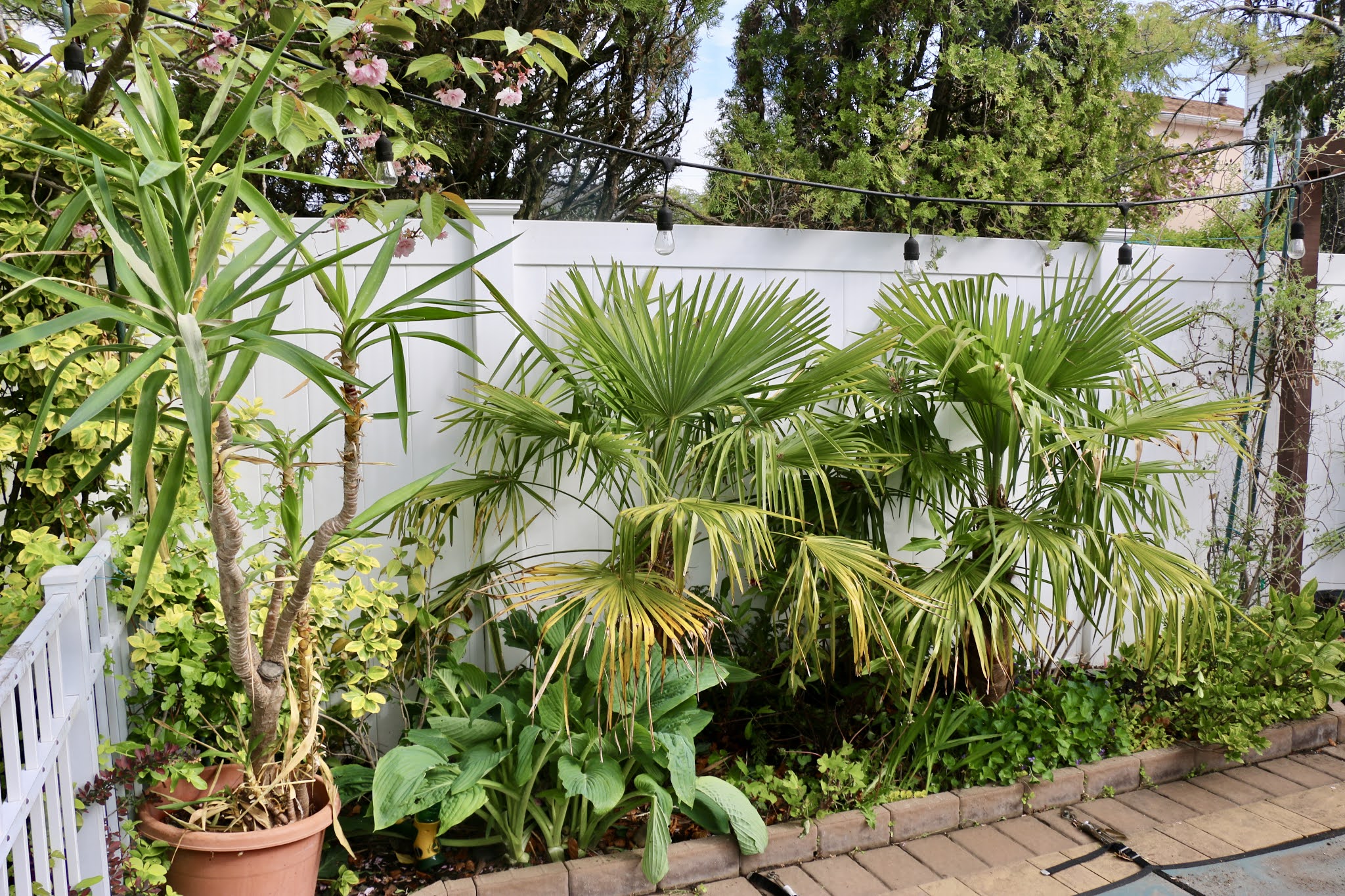
First, let's talk evergreens! How flawless are these Trachycarpus looking this season!? A zone 8b winter can do wonders for these palms. I'll trim off a few of the tattered older leaves during the summer.


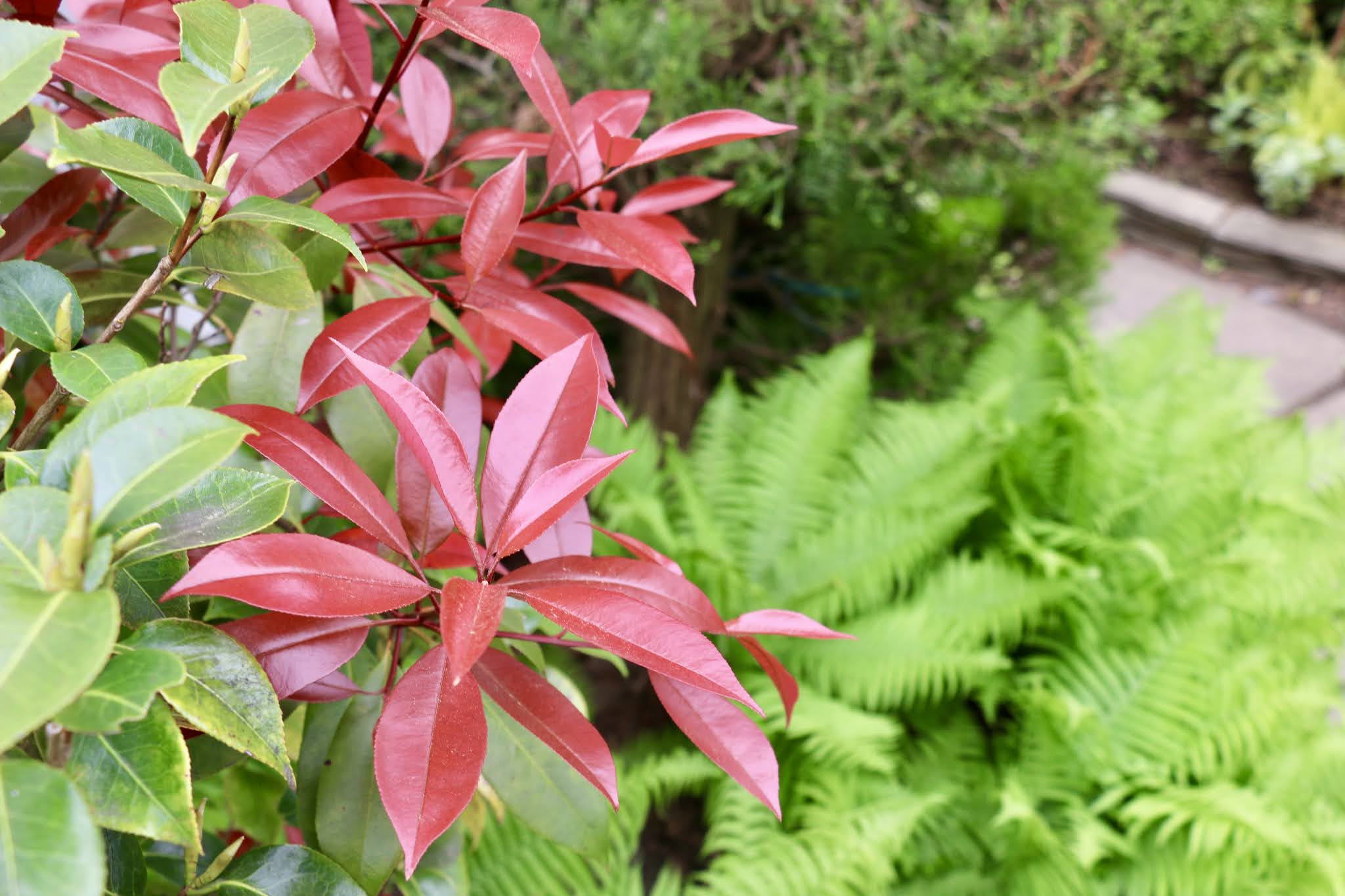
Aside from the ostrich ferns, to the left, this pathway looks identical in spring, summer, fall, and winter! The Daphniphyllum macropodum (aka Redneck rhododendron) is a rarity because it actually looks BETTER in the winter than the rest of the year. The evergreen foliage turns tinges of red near where the leaves meet the trunk (this is how it gets its common name). In the spring, the old foliage sheds and looks a little beaten up, but new leaves emerge fast and freshen the plant up! In front of the Redneck Rhody is a Rhodea Japconia which also keeps it's beautiful looks all year long. It reminds me of clivia, but without the pretty flowers.
 Daphniphyllum macropodum closeup of new leaves.

I'm not too impressed with the Camellias this year, but at least I got some nice blooms! This is Kumasaka. The foliage isn't very full. Surprisingly the gardenias look MUCH better.
Gardenia Crown Jewel and Summer Snow are both looking flawless without protection this winter. Not a surprise at all! They nearly died after a 2F low in January 2019 and haven't bloomed since. I think it will make up for it with a big show this summer!
It looks like the crown jewel gardenia is already trying to produce flower buds!
If you're looking for an evergreen fern, Tassle ferns are a must-have in zone 7! It looks like a baby tree fern. It's so furry! Even during cold winters, the fronds stay green and look really good. Sometimes it will look a little smooshed after heavy winter snow, but all is forgiven when it flushes out with new fronds each spring.
Illicium floridanum is another winner if you're looking for a beautiful evergreen. It's very cold tolerant and blooms each spring. The flowers are kind of hard to see (maybe it's because I'm red-green colorblind) but they're leaves are pretty. It's known as a Florida Anise because of the spicy fragrance the leaves emit when crushed. HOWEVER, it's NOT edible!

Red-tipped photinia is a common shrub here (I actually didn't plant it!). It's stunning in the spring when the new leaves emerge red and stays beautiful green through the winter.
Aucuba is a gorgeous, hardy evergreen shrub that looks a lot like tropical crotons! Actually, some of the recent new cultivars coming out for crotons look like aucuba. The specks of yellow are a highly desirable trait, but there are other patterns to choose from if you're looking for an even more dramatic color. Aucuba is reliably hardy in zone 7 but probably could survive temperatures briefly below zero without issues.
If yellow is your color, Yucca filamentosa "color guard" is a stunner. It's evergreen, cold tolerant, and native to the US. It takes care of a LOT of checkboxes which is why it's so common. Not every plant has to be rare and expensive to be beautiful. The white flowers on this plant in early summer will grab anyone's attention (especially the nighttime pollinators!).
It's cousin, yucca gloriosa is a little less cold tolerant, but has a beautiful, rigid structure to the foliage and more closely resembles an agave. My gloriosa has some weird black spotting on the foliage, but there are some beautiful specimens in the NYC area that have survived some of our coldest recent winters. I'd consider them marginal in NYC, but worth growing!
If you're brave, you may want to try Tractor seat plants (Farfugium japconia) in the ground in zone 7. They do fantastic outdoors here in zone 8 South Carolina, but I never wanted to risk losing these pretty evergreens, so I wheel them into my garage in NY during the winter. The yellow flowers in late fall are reliable and stunning!
I know this long leaf pine is planted way too close to this utility box. I'd just like to post this picture and apologize for my past mistakes LOL
It's a houseplant that can survive outdoors all year long in New York! Fatsia japonica is a must-have if you love funky-looking evergreen shrubs. The leaves are huge and kind of resemble a glossy, dressed-up fig. Their growth habits are totally different and while you won't get tasty fruit - you will get pretty flowers in the fall! This plant did suffer dieback when we dropped near 0F, but has recovered really nicely. I wouldn't recommend planting this without protection outside of zone 7.
These aren't evergreen but are awesome tropical looking plants to try!
You wouldn't be an italian in New York if you weren't growing figs. I used to see these trees covered all the time during the winter, but it's not necessary anymore. Even cold winters are only cold enough to knock most well situated figs back a bit in the NYC metro. Many are well over 2 feet tall!
Passiflora craeula is a semi-evergreen vine during mild winters. I've lost this plant during cold years so I'd only consider it marginally cold hardy for a northern zone 7, but would probably be flawless in a southern zone 7 where winter freezes aren't as long. It's coming back with no dieback this year!
Next to the passiflora is my American Wisteria. It puts on a beautiful show in May in New York and will rebloom again during the summertime. It's not invasive like the Japanese and Chinese species you'll see in forests.
Bronx Fig has proven to be very cold tolerant. It was only a foot tall when I planted it back in 2015, but despite frequent pruning, it's getting big!
The figs are covered with a lot of fruit after the mild winter this year in New York. I've had total dieback during really cold winters from the Brown Turkey Fig pictured above, but the Bronx fig only had minimal dieback even when we dropped close to 0F in 2016 and in 2019.
We can't go wrong with a classic tulip! These come back reliably.


This is my favorite plant of all time! I absolutely love hardy ground orchids. Don't let the "orchid" part scare you, Bletilla striata is very low maintenance and it comes back stronger each season. My only complaint is the short bloom time. It only blooms for about 3 weeks in mid-late spring (usually late May into early June in New York). The pretty foliage will stick around all summer, and you'll usually see some interesting seed pots, but it does fade into the background for most of the warm months. But don't let that discourage you. I planted maybe 10 stalks in 2015 6 years later have over 100! Each stalk will produce 5-10 blooms. We're talking a THOUSAND orchid blooms in New York City! There's a hardy orchid for even the coldest gardens in North America, including some gorgeous native lady slipper orchids that are a must-have for the native purists that want something a little funky in their garden.
That's all for this week! In the meantime, you can follow my plant adventures on social media and on this blog!